
Posts from May 2025
Subscribe and receive email notifications of new blog posts.
 RSS Feed
8
Stocks May Be Volatile, but Home Values Aren't
With all the uncertainty in the economy, the stock market has been bouncing around more than usual. And if you've been watching your 401(k) or investments lately, chances are you've felt that pit in your stomach. One day it's up. The next day, it's not. And that may make you feel a little worried about your finances.
But here's the thing you need to remember if you're a homeowner. According to Investopedia:
"Traditionally, stocks have been far more volatile than real estate. That's not to say that real estate prices aren't ever volatile—the years around the 2007 to 2008 financial crisis are just one memorable example—but stocks are more prone to la...
7
Your Home Equity Could Make Moving Possible
Some Highlights
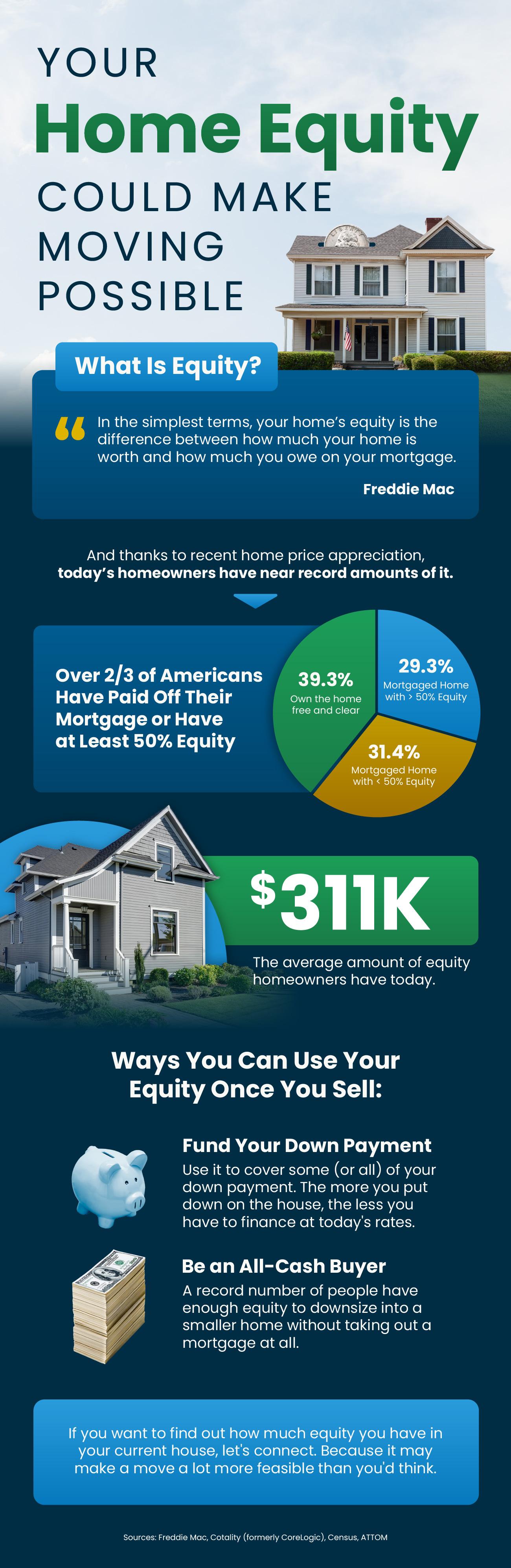
- Thanks to recent home price appreciation, homeowners have near record amounts of equity – and you may too. On average, homeowners have $311K worth of equity.
- Once you sell, you can us...
7
What an Economic Slowdown Could Mean for the Housing Market
Talk about the economy is all over the news, and the odds of a recession are rising this year. That's leaving a lot of people wondering what it means for the value of their home – and their buying power.
Let's take a look at some historical data to show what's happened in the housing market during each recession, going all the way back to the 1980s. The facts may surprise you.
A Recession Doesn't Mean Home Prices Will Fall
Many people think that if a recession hits, home prices will fall like they did in 2008. But that was an exception, not the rule. It was the only time the market saw such a steep drop in prices. And it hasn't happened since, mainly because inventory is still so low overall....
4
A Tale of Two Housing Markets

For a long time, the housing market was all sunshine for sellers. Homes were flying off the shelves, and buyers had to compete like crazy. But lately, things are starting to shift. Some areas are still super competitive for buyers, while others are seeing more homes sit on the market, giving buyers a bit more breathing room.
In other words, it's a tale of two markets, and knowing which one you're in makes a huge difference when you move.
What Is a Buyer's Market vs. a Seller's Market?
In a buyer's market, there are a lot of homes for sale, and not as many people buying. With fewer buyers competing for these homes, that means they generally sit on the market longer, they might not sell for as...
4
Why Today's Foreclosure Numbers Aren't a Warning Sign

When it feels like the cost of just about everything is rising, it's only natural to wonder what that means for the housing market. Some people are even questioning whether more homeowners will struggle to make their mortgage payments, ultimately leading to a wave of foreclosures. And recent data showing foreclosure filings have increased is only feeding into this fear. But don't let that scare you.
If you put the latest data into context, it's clear there's no reason to think this is a repeat of the last housing crash.
This Isn't Like 2008
While it's true that foreclosure filings ticked up in the latest quarterly
AWARD WINNING SERVICES

GLOBAL REACH & HOME INSURANCE



WEBSITE AWARDS



Market Report
Sign up today to stay updated on what’s happening in your local real estate market.
